
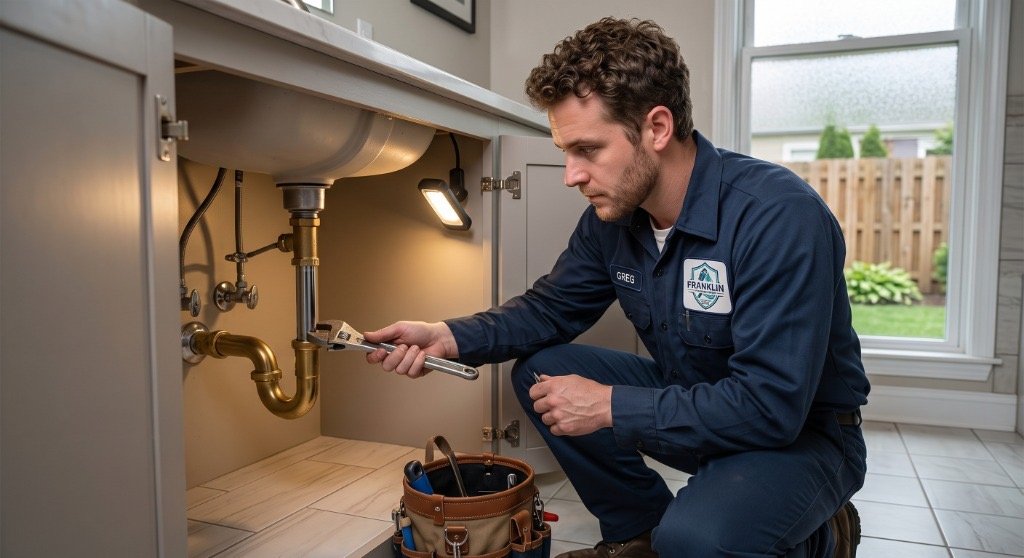
Comprehensive Guide: Sewer Line Repair & Replacement Cost in Franklin, TN
When planning for sewer line repair & replacement cost in Franklin, Tennessee and Williamson County, having a thorough understanding of the factors that govern project pricing empowers you to make informed, budget-conscious decisions for your home or business. At Franklin Plumber Expert, owned and operated by Master Plumber William Garcia, we provide honest, transparent evaluations, itemized pricing, and dependable craftsmanship backed by Tennessee code compliance.
Unlike services with static menu pricing, plumbing installations and repairs involve real-world physical variables: pipe accessibility (crawlspace, finished drywall, or under-slab concrete), structural age, water pressure conditions from the City of Franklin Water Department, and regional geological factors like Middle Tennessee limestone bedrock. Below is a detailed breakdown of how professional plumbing costs are calculated and what you should consider when planning your project.
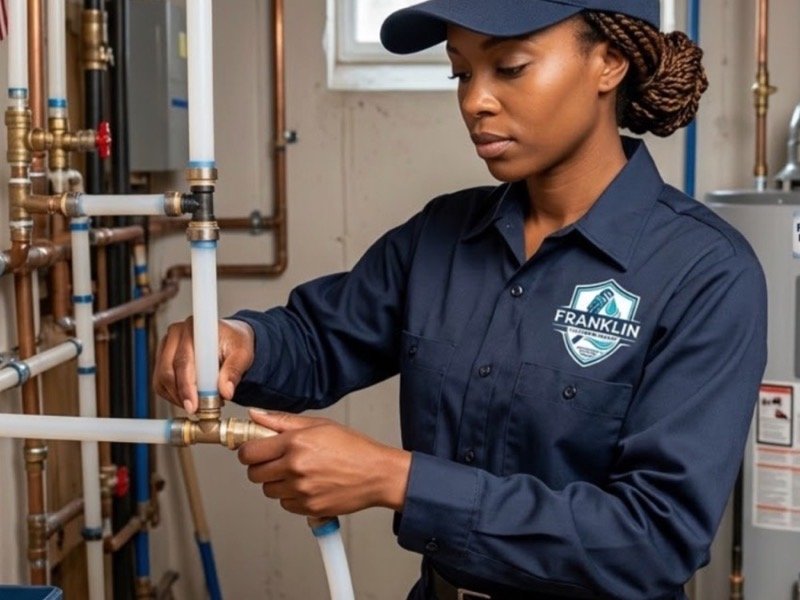
Request an Itemized On-Site Quote in Franklin, TN
Need a reliable, professional assessment for sewer repair cost? Call Franklin Plumber Expert directly at +1 (629) 248-9328. We inspect the problem, explain your repair and replacement options, and provide transparent written pricing before work begins.
Key Technical Factors Influencing Sewer Line Repair & Replacement Cost
Professional plumbing contractors evaluate several primary factors when calculating project estimates in Franklin, TN:
- Depth and linear footage of the damaged sewer lateral from foundation to municipal tap: Depth and linear footage of the damaged sewer lateral from foundation to municipal tap
- Presence of dense Middle Tennessee limestone bedrock requiring hydraulic rock breakers: Presence of dense Middle Tennessee limestone bedrock requiring hydraulic rock breakers
- Methodology selected: non-destructive trenchless CIPP epoxy lining vs. hydraulic pipe bursting vs. traditional open-trench excavation: Methodology selected: non-destructive trenchless CIPP epoxy lining vs. hydraulic pipe bursting vs. traditional open-trench excavation
- Surface restoration requirements: Surface restoration requirements (preserving mature landscaping, asphalt driveways, concrete sidewalks, or historic brick pavers)
- City and county right-of-way permitting, street cut bonds, and municipal sewer tap connection fees: City and county right-of-way permitting, street cut bonds, and municipal sewer tap connection fees
Our 4-Stage Transparent Estimate Framework
To ensure complete clarity and eliminate unexpected surprises, our estimates clearly separate project elements into straightforward categories:
- High-Definition Fiber-Optic Line Diagnostic & Sonde Depth Mapping: High-Definition Fiber-Optic Line Diagnostic & Sonde Depth Mapping
- Trenchless Access Pit Excavation or Precision Trench Digging: Trenchless Access Pit Excavation or Precision Trench Digging
- Seamless Epoxy CIPP Liner Inversion or New Schedule 40 PVC Pipe Placement: Seamless Epoxy CIPP Liner Inversion or New Schedule 40 PVC Pipe Placement
- Municipal Inspection, Backfill Compaction, and Final Flow Certification: Municipal Inspection, Backfill Compaction, and Final Flow Certification
Local Infrastructure & Environmental Cost Impacts in Williamson County
Plumbing systems in Franklin and Williamson County are uniquely affected by regional environmental factors that directly shape installation and repair requirements:
- Limestone Hard Water Scale: Middle Tennessee water averages 8 to 14 grains of dissolved calcium and magnesium carbonates per gallon. Over years of service, mineral scale narrows the internal diameter of copper supply lines, encrusts water heater heating elements, and fouls valve seals, often turning a simple fixture repair into a broader plumbing replacement requirement.
- High Municipal Main Pressure: Municipal water supply mains in Franklin and Brentwood frequently supply water at pressures exceeding 90 to 110 PSI. When performing repiping or water heater replacements, installing an approved Pressure Reducing Valve (PRV) and an ASME-rated thermal expansion tank is mandatory by code to prevent voiding appliance warranties and protect against pipe bursts.
- Subterranean Limestone Bedrock: For underground water service line repairs and sewer lateral excavations, shallow limestone rock shelves often require hydraulic rock-breaking machinery, influencing excavation labor compared to softer clay regions.
- Foundation Construction: Homes built on monolithic concrete slab foundations require non-invasive electronic acoustic leak detection and overhead PEX reroutes to avoid disruptive concrete demolition, whereas crawlspace homes offer direct mechanical access beneath floor joists.
Repair vs. Replacement: Making the Economical Decision
A frequent question from Franklin homeowners is whether to repair an existing plumbing fixture or replace it entirely. Our technicians evaluate equipment age, failure history, and component availability:
If a fixture is in the first half of its expected operating life and the issue involves an isolated consumable part (such as a thermocouple, heating element, valve cartridge, or flapper), mechanical repair is the economical choice. However, if the unit has exceeded 10-12 years of age, has suffered multiple recent leaks, or exhibits tank corrosion or pipe wall thinning, replacement delivers far superior energy efficiency, lower utility bills, and long-term protection against sudden flooding.
Our Transparent Pricing Commitment
Franklin Plumber Expert is committed to total transparency. We do not use deceptive bait-and-switch pricing or hidden fees. William Garcia and our certified technicians provide clear, written evaluations before starting any work, ensuring you always know the exact scope and cost upfront.